

What Hue unlocks
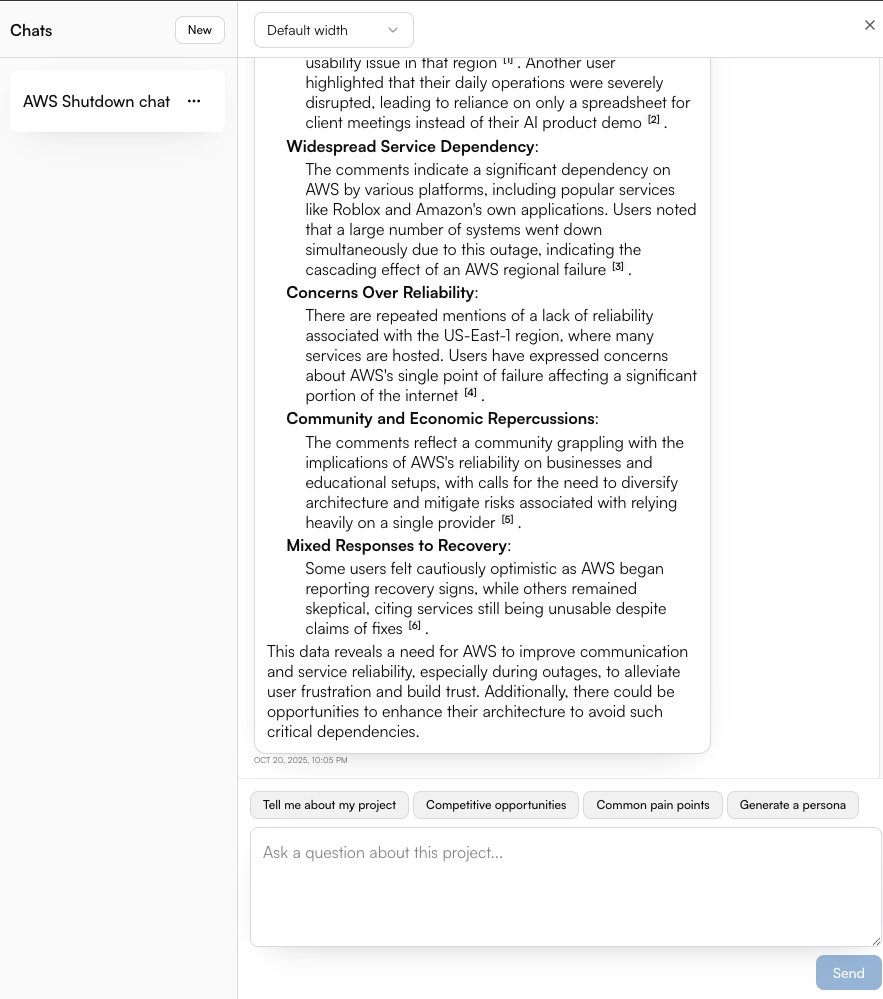
Hue is your AI research partner. Instead of combing through dashboards, you can ask freeform questions and receive synthesized answers, quotes, and recommended next steps drawn from the latest community conversations.Core prompt modes
Tell me about my project
Ask Hue for a narrative recap of everything Humyn has ingested for your current project: key themes, sentiment shifts, and standout quotes.
Competitive opportunities
Compare how customers talk about you versus alternatives, spot gaps, and surface differentiators you can act on quickly.
Common pain points
Zero in on recurring frustrations, blockers, or unmet needs so product, design, and support teams can prioritize the right fixes.
Generate a persona
Hue will assemble a living persona using your project’s data—motivations, objections, rituals, and verbatim language pulled directly from community threads.
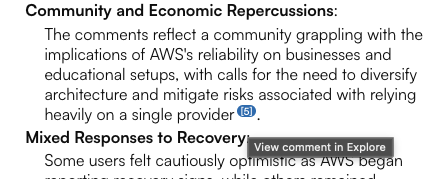
Every answer includes inline highlights and a Citations panel so you can jump straight to the source threads without leaving the chat.
Prompt library by role
- Product managers
- Product designers
- Investors & analysts
- General operators
- Summarize voices — “How do our power users describe the core job-to-be-done in this project?”
- Flag risks — “Which blockers are trending upward this week and why?”
- Compare competitors — “List the feature gaps customers mention most versus [competitor].”
- Justify roadmap — “Provide three quotes that support prioritizing [feature] next sprint.”
Craft every prompt with four ingredients: context, timeframe, desired output, and follow-up action. Hue performs best when you spell those out explicitly.
Cultural and behavioral prompt packs
Community psychology & identity
- “Describe the unspoken values or identity traits this community seems to share. What does belonging mean here?”
- “What emotions drive engagement in this space — pride, anxiety, curiosity, rebellion, etc.?”
- “How do members define ‘expertise’ or ‘credibility’? What makes someone respected or dismissed?”
- “Summarize the archetypes that appear in this community — the mentor, skeptic, innovator, purist, etc.”
- “What recurring fears or insecurities show up in posts, even if not said outright?”
Behavior & rituals
- “What daily or weekly habits define active members of this community?”
- “Identify moments of initiation or status signaling — what actions make someone a ‘real’ member?”
- “How does humor, sarcasm, or insider language build group cohesion here?”
- “What are the community’s ‘sacred’ topics versus taboo or overdone ones?”
- “How do members celebrate success, and how do they handle failure or mistakes?”
Trend & sentiment dynamics
- “What patterns of enthusiasm vs fatigue are emerging over time?”
- “Highlight new ideas, frameworks, or keywords gaining traction in the past three months.”
- “Which topics generate the most heated debate — and why?”
- “Detect shifts in tone or mood that might signal cultural or product fatigue.”
- “Who or what is being positioned as ‘the next big thing,’ and who’s skeptical of it?”
Influence & discourse
- “Map the informal leaders or hubs of influence in this space — who shapes what others think?”
- “Compare how top posters and casual members frame the same topics differently.”
- “What types of content (advice, critique, humor, data, story) earn the most credibility?”
- “Which users or subgroups challenge dominant opinions — and how does the community react?”
- “How does language evolve around influential moments or controversies?”
Cultural signals & symbolism
- “What symbols, memes, or metaphors repeatedly appear — and what do they represent culturally?”
- “How does this community’s slang reflect its worldview?”
- “What external trends (tech, politics, aesthetics) influence how people talk here?”
- “If this community were a person, what would their personality and worldview be?”
- “What aesthetic or visual markers show group belonging (colors, emojis, formatting, tone)?”
Opportunity & insight extraction
- “What unmet needs or frustrations appear frequently but without clear solutions?”
- “Which products, brands, or ideas are consistently mentioned with trust — or disdain?”
- “Identify hidden audience segments based on tone, motivation, or behavior.”
- “What ‘jobs-to-be-done’ language appears across discussions (phrases like ‘I wish I could…’ or ‘I struggle to…’)? ”
- “How might a new product or service naturally fit into this culture’s existing rituals?”
Anatomy of a response
Usage patterns
- Prep for stakeholder meetings by gathering the freshest perspective on a topic.
- Draft release notes, enablement scripts, personas, and content angles in minutes.
- Pressure-test ideas before you commit to a sprint or campaign.
- Build a searchable library of approved prompts new teammates can reuse, organized by role in your internal wiki.
Guardrails
- Avoid sharing sensitive or embargoed plans directly in prompts.
- Review Hue’s citations before quoting in external materials.
- Refresh prompts after major launches or taxonomy updates to avoid drift.
- Capture feedback for the product team in the Humyn Discord.